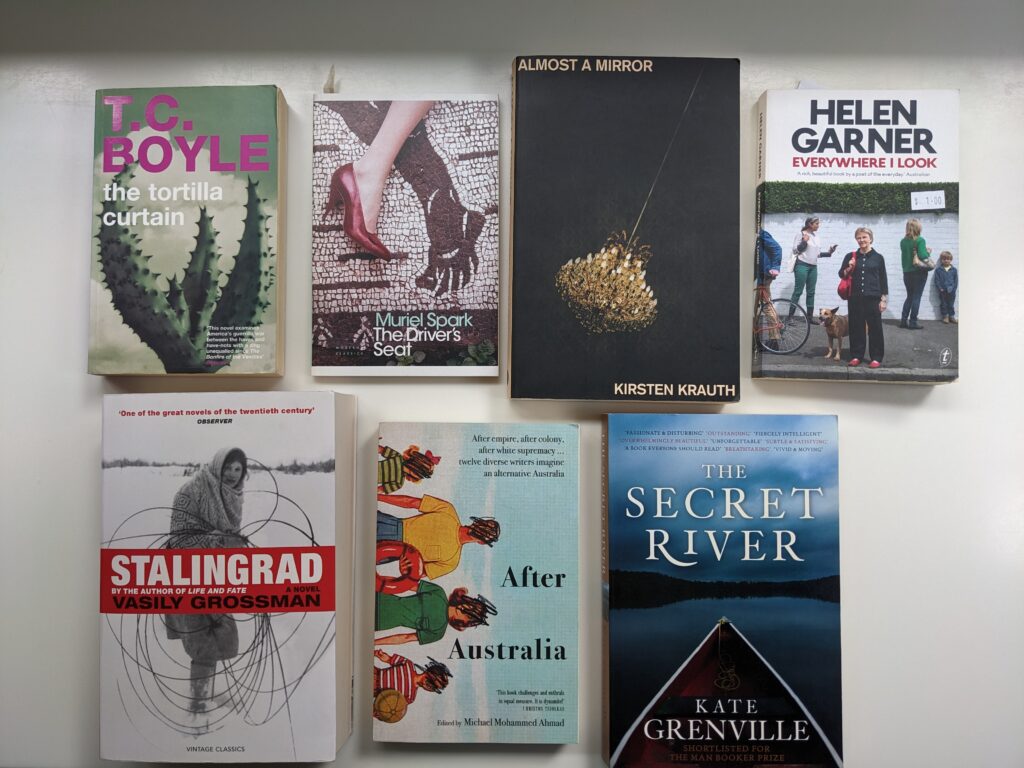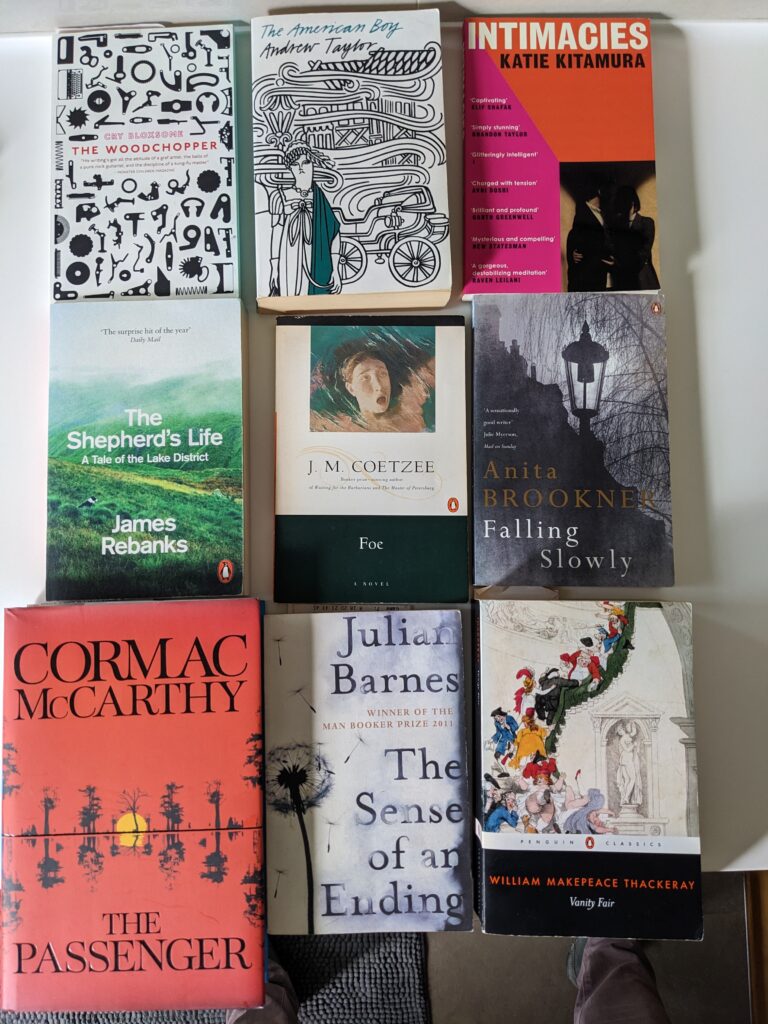
Really can’t be bothered writing a proper synopsis of some recent pancreatitis problems, and since I’ve told my sorry story 20 times, I’m just going to say I’m back to 66 kilos from 61 and I’m feeling fine and am already bored of being back at work after an 8 week absence. Have even snuck in a couple of pots of stout this past week with no adverse effects, though I don’t feel I’ve quite got my past liking for it back yet – tasted slightly odd to me.
What happened after 1603? I’ll tell ya!
Driven by an unexpected urge to read about English history, I found myself at the end of Tudor Queen Elizabeth 1st’s reign in 1603 wondering about the possible future of a Catholic or Calvinist England and the origins of Great Britain, and genuinely not knowing the answers. It felt like the ultimate whodunit really. When the “virgin queen” Elizabeth allowed Mary, Queen of Scots’ execution, she pretty much signed over the English crown to the young James (Stuart) VI, King of Scotland, as she was the last Tudor.
I was dying to know what happened next, and it can be crudely summarised like this:
James VI (Scotland) became King James I of England (you know – the King James bible? Yeah that guy!). He was a great talker, but not much of a doer, and was much unprepared on entry into England for the complexity of the English Parliament and governmental Administration.
Succeeded by son Charles I, who was quiet and economical with his words, and who ruled for 24 years before a Civil War between an increasingly hostile Parliament (steered by Pym) and Oliver Cromwell’s New Model Army and the King’s Loyalists began. He was eventually captured by the Scottish army and was handed over for trial and execution.
Oliver Cromwell took over as Lord Protector (wisely refusing to be named King) for 11 years before the “Restoration” began, and Charles’ son in exile Charles II was restored to the position on Cromwells death.
Charles II was a popular and at times ruthless King who restored the Anglican Church to it’s former glory (from Cromwell’s Puritans) and ruled for nearly 25 years before suffering a stroke, and was on his death bed received by a Catholic priest.
His son James II didn’t last long – was Catholic and sought to place fellow Catholics in high positions in Parliament and in the Church. Was attacked on English soil by William of Orange (the Dutch husband of his sister!) and forced out of England into exile in Catholic France.
William and sister Mary Stuart ruled as King and Queen for 13 years before he died in a horse accident and the Stuart lineage ended in James II’s daughter Queen Anne.
And that takes me up to 1714. Time for the Hannovers.
Oh and there’s the genetic condition
I’ve been having blood test after blood test for significantly odd liver readings and they have finally found it. I have Alpha-1! Sounds like I won a prize or something, but it’s really not quite the boon, or shrug-off moment I figured it might be.
There’s not a lot more to say just yet – I am bracing myself for the Spirometry test results on my lungs for genetically derived Emphysema and for a liver biopsy procedure. I have been wheezing a lot lately and using my asthma pump a bit. Apparently sufferers can have either just liver damage or lung damage or both.
The Wikipedia bit that still rings in my head is “but it usually produces some degree of disability and reduced life expectancy”
Let’s just see what happens I suppose. I have been feeling a bit down and out about it tbh but what do you do? Retire early? Woohoo!!
Essendon Stamp Fair
I walked into the Ukrainian Hall in Aberfeldie recently, expecting a Computer Swap Meet-sized crowd, only to find more store holders than customers. There was literally 20 people in the place at 11am on a Sunday morning. I baulked. I’d never been to a Stamp Fair before. I had no understanding of what to bring, how to discuss my revived hobby, or what was allowed between buyer and dealer.
I stumbled forward nervously – there was barely anyone in the large room, and no cars out front. The local teens were smoking on the footpath outside – only a small sandwich board down the street gave any indication that anything was going on. At other fairs, I’d become used to standing and browsing from a distance before being forced to interact when about to buy. BUT THERE WAS NO GETTING PAST THE UTTER INTIMACY OF A SUBURBAN STAMP FAIR – to even look at the books you needed to be introduced or accepted somehow. An overweight and lonely trestle-table owner was eating a sandwich at the rear – it seemed the natural place to go to when each other stall already had a seated pensioner in front leafing through books. I was familiar with some stamp acronyms, but even then I faltered when I mumbled about an interest in KGVs (see pic below) and he didn’t understand me properly.
Both dealer and customer appeared to know each other intimately – for the last 20 years or more. It felt like a hobby that was dying really – and it probably is.
I walked out with about $250 worth of stamps I had been wanting to fill out most of the remaining chunks of my collection of 1930 to 1965 pre-decimal Australian stamps. By then I’d earned the trust of a few sellers; they let you remove the stamps on your own, and write down the prices on a sheet (at least for the sub $30 stamps) – that felt nice. And boy can they gossip and gasbag – I guess they get bored sitting there for 4-5 hours each time. Now I’m hanging out to get back there next month where I have some of the tougher KGV and Kangaroos to source. The game gets a lot more serious at 50-100 a pop, but I feel a lot safer at the Fair than bidding on an unknown watermark or hinge mark on Ebay.
The Rings of Saturn
No, this not an Asimov book review, but a curiously titled book from the mysterious and deceased German expatriate W.G Sebald. He is one of the few writers that when reading I find myself subconsciously slowing down to make it last longer. It surprises me that he is so popular in the literary world since he writes quite simply, includes plenty of photos in his books and is translated from his native German, something in my experience often adds a dry quality to the work….not that I am any expert. His books combine some of my favourite themes over the last few years…history, travel and memory, all of which are woven into an anthology of strikingly diverse topics. You really don’t know what you’re about to discover next. I sometimes think he Sebald is the person I would like to become when I retire from work one day. What he shame he died so tragically of a car accident in 2001 at the age of only 57.
This time around he walks south through Suffolk (UK) exploring its history and forgotten places, visiting an enviable series of colleagues. I found myself getting out an old Readers Digest A3 sized Atlas and charting his course in East Anglia. It seems I like each of his books more than the last, enjoying the photos which breathe mystery and mood into the text. Can’t wait for his next one already – going to try The Immigrants this time. The Times review on the cover calls him a 21st century Joyce which I found surprising since the 50 pages of Ulysses I struggled through were baffling and because he died 1 year into the 21st century. Guess I should give Joyce another shot. 4.5 stars.
Romulus
I don’t know what inspired me to pick up this book; it certainly wasn’t the title, but what an amazing recollection it is. In other hands this story could have been portrayed completely differently; the unbearably simple puritan values of Romulus derided and his stubborn eccentricities blamed for all the misery that seems the surround the family and their friends. But amazingly his son Raimond seeks to write an overwhelmingly accepting novel, completely engrossing and able to be read in a single sitting.
It portrays the Australian migrant experience of a former time; of forced life in rural backwaters, and the brutality of isolation. The simplicity of the life described is a revelation and is a big part of the work’s effectiveness and emotional impact. How Raimond turned out ok is anyone’s guess! 5 stars.
Experiment part 6
My WoW experiment in a more hardcore guild concluded after 20 months when I left the guild on Christmas Day. A whole lot of overlapping things made me come to my senses and realise I needed to get out before I began to resent raid nights and the efforts of the guild officers, and sour the wonderful WoW raiding experience forever. It had always disconcerted me that when 25 people would join the Ventrilo chat channel, it would just be totally silent (as it they had stage fright). The truth was that mostly they hadn’t formed many friendships and had little to say to each other. In over a year and a half, I barely got to know more than 3-4 people, which I find astounding for a game I played twice a week for 3 hours a go. Having been in other guilds that were not like that at all, I realised it was this guild that had the problem – or more specifically, I HAD A PROBLEM WITH IT.
Most frustrating for me was the fact that a few of the core members (excluding the guild leader) tended to whine a lot, blame others (or Blizzard) and had poor attitudes in general. I want to be with positive people who aren’t frothing or finger pointing in Healer Chat, or who start telling other players how to play their class “It’s pretty easy really, I just….” etc. When some long term players gradually left I found myself thinking – I’m now one of the longest term members, and I don’t even really like the other long termers much – yikes!
The guild leader was quite nice however the structure always seemed to bottleneck through her, and when she was flagging in enthusiasm, everything suffered – recruiting, the website, the positivity. I don’t think she ever quite realised that the high turnover of players might be partly because of the way the guild was run, or some of the people in it, driving others away. She tried so hard to keep things going that I have a huge respect for her tenacity, but it probably won’t be enough to save the guild in a 25 man format. I raided with some amazing players, but I left feeling like it was a bit souless in the end. So many of the stalwarts would not talk on the mike for whatever reason, so in the end people wouldn’t give much back in return.
My old guild already has a 10 man raid team with spares in the wings, so I joined theoldergamers.net and got a 10 man spot in one of their teams. There is an immediate difference in maturity and in how they relate to each other, even if their progression is fairly poor. It is very reassuring. I’m not saying I will be there forever, but next time, before I commit to competitive raiding again, I want the guild structure and culture to be a lot better than what it was in my last guild. Sadly, you often have to join a guild to find this out.
2012
Who would have guessed that English History would become the object of my interest in 2012? Like most hobbies, passions morph from a subject to an adjoining, related one and before you know it, you’re into new territory. Birds to plants to weather to home vegetable gardens to renewables. See what I just did? This year it went from a Booker prize winner writing about the Thomas Cromwell, to Downton Abbey to Game of Thrones to The Tudors to the History of England parts 1 and 2. And now it’s The Borgias and a huge volume on the virgin queen Elizabeth I. Kim, sensing the need for new ground, recently bought me a book on the history of Venice, though I confess it may be too much of a jump.
I was a lot happier about my reading in 2012 – probably only a dozen books, but many of them BIG, a far cry from the shameful four of 2011. Fiction has soured for me; I find myself getting bored, or putting it down and then not having the urge to pick it up again. I regained interest in my long neglected (since 1982) collection of King George V stamps, then decided that my old crappy used copies could be upgraded to mint (unused) and so pretty much started it all again from scratch. Then added the Australian pre-decimals, and then the kangaroos. Oh dear. That gets expensive fast – the kangaroos are about $2.5k for a used set, so I’ve come to a bit of a halt on the rarer ones. It’s been quite a blast on Ebay though, but bedtime phone use has skyrocketed.
I nearly forgot, 2012 was the year of the “renovation” – we got a new kitchen and bathroom in November, which are great improvements even if visitors are generally tactful “oh you went for a modern green?” and underwhelmed. We both really love it, so we wonder if our tastes are out of step. The architect Marcus was jubilant at not having to do *another white kitchen* but he’s the only one (of a very small group) who seem keen. I guess people aren’t very demonstrative about things like benchtops and sinks.
Finally Chloe’s panting and thirst got more notable, and after a series of very expensive tests was diagnosed with Canine Cushings disease, which means her liver is in bad shape, and her cortisone levels are sky high. We brought the levels down with daily tablets, but now she’s almost crippled by leg pain / arthritis, and often stands in one spot till she is forced to move with considerable limping. The doggy pram may soon need to be purchased for walks. It’s very sad to see it all gradually deteriorating. Been a good year all round though.
Some more books done
I’ve have always felt underdone on the earlier Aussie authors, and maybe it’s just that point in life where I have the time and mood to fill out some literary gaps, but I’m starting to get through them, with some big names to come.. Last month it was David Ireland and this month it was reading David Marr’s massive Patrick White: A Life. I always knew White was our only Nobel prize winning author, and that he was difficult, but this biography really laid him bare. What a miserable, cruel prick he was! Most interesting for me was the way his politics changed quite radically over the years, the insistence on regular extended trips to Europe for real culture, and on his chronic asthmatic condition and hospitalisation over 50 years. Not a great deal was said about partner Manoly, however given White’s famous self-hatred and the uneasy dinner parties squabbles he seemed to relish, the man can only be regarded as a masochist for sticking around. He certainly didn’t have much of a voice in the book.
I thought it was fantastic that White refused to accept pretty much every prize or award offered him, except the Nobel prize, sending friend Sidney Nolan instead to Stockholm to accept it in his place. Other prizes sent to him, he binned. He could not abide other artists bathing in the intellectual or monetary glory of their fame, and would viciously cut them down for doing so. Also a surprise to me was his love of theatre, and the number of plays he would work on seemingly as ligh relief, as he found writing novels more torturous and became an even more difficult human being to be around during them. I thought it was a magnificent character study of White, if a little harsh, though White himself was said to be harsher on himself than anyone. He had literary agents buy back copies of his early works from shops and refused requests to reprint them as he considered them substandard. A long book which achieves it’s aim. 4.5 stars.
Out of curiousity I tried another from Halldor Laxness- Under the Glacier, and was again a little underwhelmed, You know you’re perhaps not quite on track when one reviewer labels it as the funniest book they’d read in a long time, and I’d barely done more than smirk occasionally. I was aware I was reading the book at quite a superficial level, but I ploughed on, and I’m not even sure what happened at the end really! 3 stars.
Also finished A Pint of Plain by American Bill Barich who had the luxury of spending years gallivanting around Ireland looking for authenticity in the local pubs, and getting fooled by old props and memorabilia. Still, it was hard to put down and made me want to meet some of the fiercely independent proprietors who, usually to their disadvantage, had held out against the blaring digital widescreen TVs and video-games invading other pubs. His quest for the real craic – gifted musicians drifting in to hotels and playing spontaneous tunes, or for the literary Ireland of Joyce and Yeats left me disinterested, but this was still a great read. 4 stars.
The Glass Canoe
There is something uncollectable about the design of last years Text Publishing “Classics” series of books. They don’t have the rich maroon grandeur or the humble olive green simplicity of the two Classics series by Vintage, and the paper quality is very poor, even for the price of 12.95. The font is also suspect (!) however, I couldn’t get David Irelands’ book from 1972 any other way, aside from a lucky find secondhand maybe.
The story itself was a series of vignettes based around events in a pub in southern Sydney in the rough and tumble 70s, so simply written but menacing in a Wake In Fright way (and more) and gloriously celebrates the working class drinker and his tribe. I was completely caught up in the mood of the pieces, gasping at the casual savagery shown to outsiders, the silent body language and hierarchy of the men, the ease with which the outrageous became acceptable. In my view it’s a bit of a masterpiece of seemingly simple writing that captures the time perfectly. 4.5 stars.